Clash Detection, Reporting & Resolution
What we can offer you
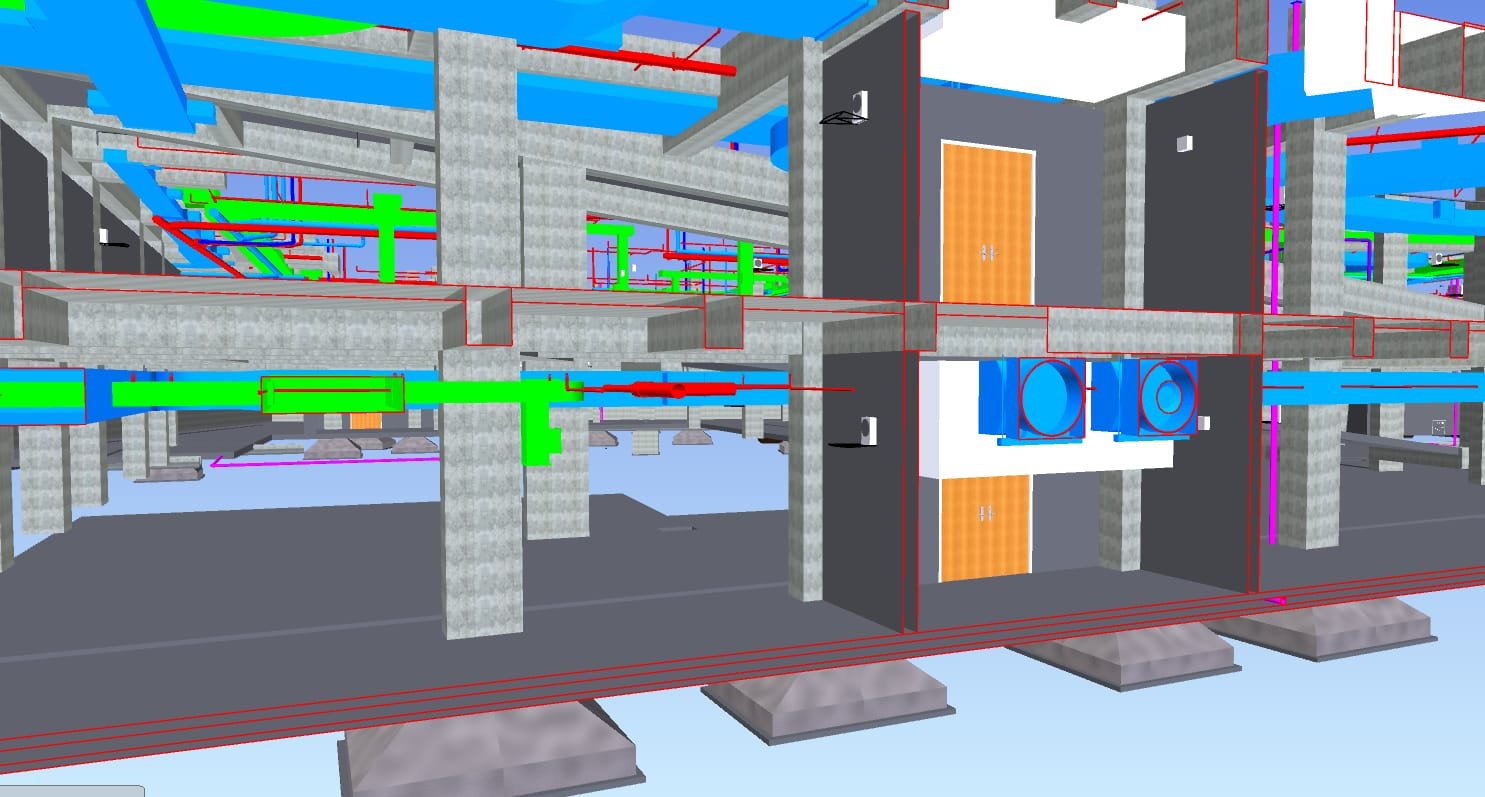
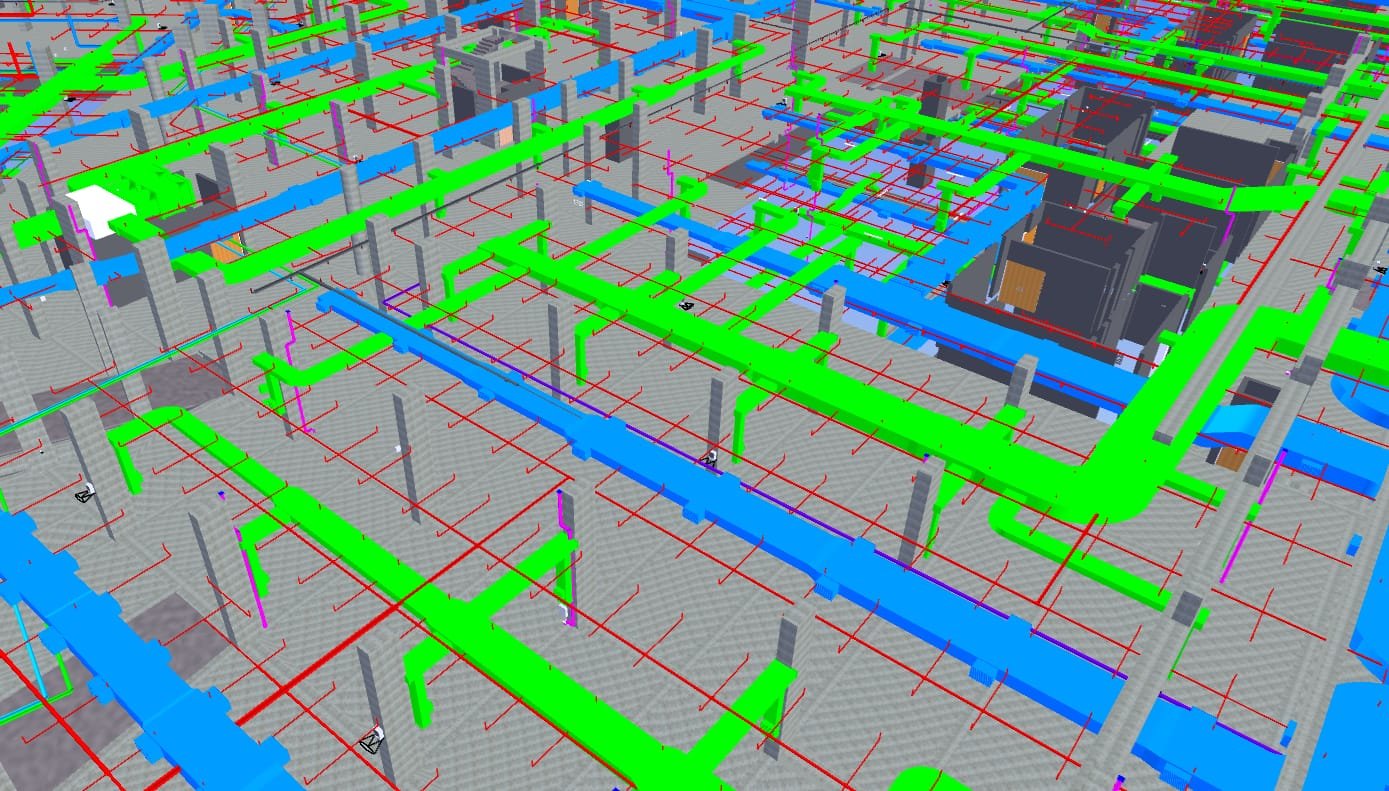
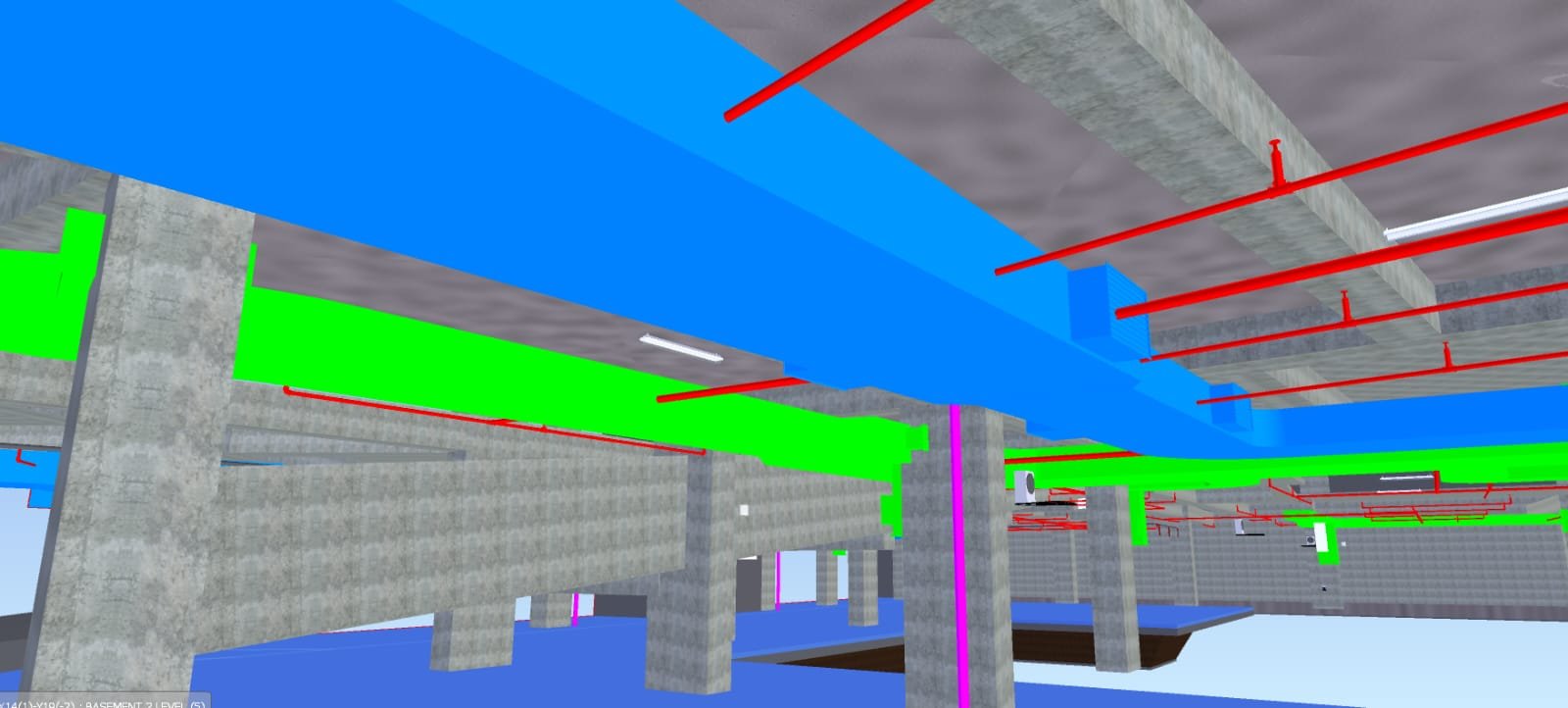
Clash Detection Federated model coordination that catches geometric and spatial conflicts across disciplines long before they become site-level rework. Our structured clash workflow — aggregation, rule configuration, triage, reporting, and resolution tracking — turns coordination from a reactive fire-drill into a predictable, scheduled process.
Model Coordination: Federated multi-discipline models assembled and checked for design review, giving all project stakeholders a unified, up-to-date view of the building as it develops.
Catch conflicts before they hit the site. Our clash detection process finds, reports, and tracks resolution across every discipline — saving time, cost, and rework once construction begins.
Our Process
- Model Aggregation — All discipline models (architectural, structural, MEP, civil) are federated into a single coordinated environment in Navisworks, ensuring every trade’s geometry is checked against every other.
- Rule Configuration — Clash rules are configured per discipline pairing (e.g., Architecture vs. MEP, Structure vs. MEP), with tolerances set to reflect real-world clearance requirements rather than flagging every minor overlap.
- Clash Run & Triage — Automated detection identifies hard, soft, and clearance clashes; duplicate and near-duplicate results are filtered out so the team reviews only genuine, actionable conflicts.
- Clash Report — Clear PDF/Excel reports are issued with snapshots, precise location data, severity ranking, and an assigned owner for each clash — removing ambiguity about who resolves what.
- Resolution Tracking — Structured coordination meetings are held to assign, resolve, and verify each clash, with a live status log so nothing falls through the cracks before issue-for-construction.
Clash Types We Detect
Hard Clashes
Direct physical intersections between elements from different disciplines (e.g., a duct passing through a structural beam).
Soft Clashes
Violations ofclearance or maintenance-access requirements, such as insufficient space around equipment for future servicing.
Workflow/4D Clashes
Time-based sequencing conflicts, where two trades are scheduled to occupy the same space at the same time even iftheir final geometry doesn't overlap.
Software Used
Built on Industry-Standard Tools We coordinate using the platforms your project teams already trust:
- Autodesk Navisworks — Federated model review, clash detection (hard, soft, and clearance clashes), and clash test management across all disciplines.
- Revizto — Real-time issue tracking, stakeholder collaboration, and integrated coordination meetings with live model walkthroughs.
- Autodesk BIM 360 / Autodesk Construction Cloud — Cloud-based model coordination, document control, and issue tracking synced across the entire project team.
Briefly note compatibility: models can be received in Revit, IFC, or other common formats and federated regardless of each trade’s native authoring tool.
Set clear expectations so prospects can plan around your service:
| Service | Typical Turnaround |
| Initial model federation & clash run | 1–3 business days |
| Weekly coordination clash report | Delivered same day as review meeting |
| Full clash resolution cycle (single phase) | 2–4 weeks, depending on project complexity |
| Rush/priority clash review | 24–48 hours (premium rate) |